One Sanctuary, Four Experiences: Trails, Hides and the Birds Worth Knowing
Most visitors arrive at Thattekad expecting a single walk through a single forest. What they find instead is a sanctuary organised around distinct trails, each one built to deliver a genuinely different set of species — and a supporting infrastructure of hides and night sessions that most first-time visitors don’t even know exists until a guide mentions it. Treating Thattekad as one generic birding walk means missing most of what makes it worth the trip. This is a breakdown of each trail, what it actually delivers, and the species spotlight worth knowing before you go.
The Salim Ali Trail
This is Thattekad’s flagship trail, and the one most visitors experience first. Named for the sanctuary’s founding ornithologist, it’s a self-guided route running more than five kilometres through the sanctuary’s interior, open throughout working hours and requiring no mandatory guide — though a good local guide dramatically improves what you’ll actually identify, rather than simply hear rustling past you.
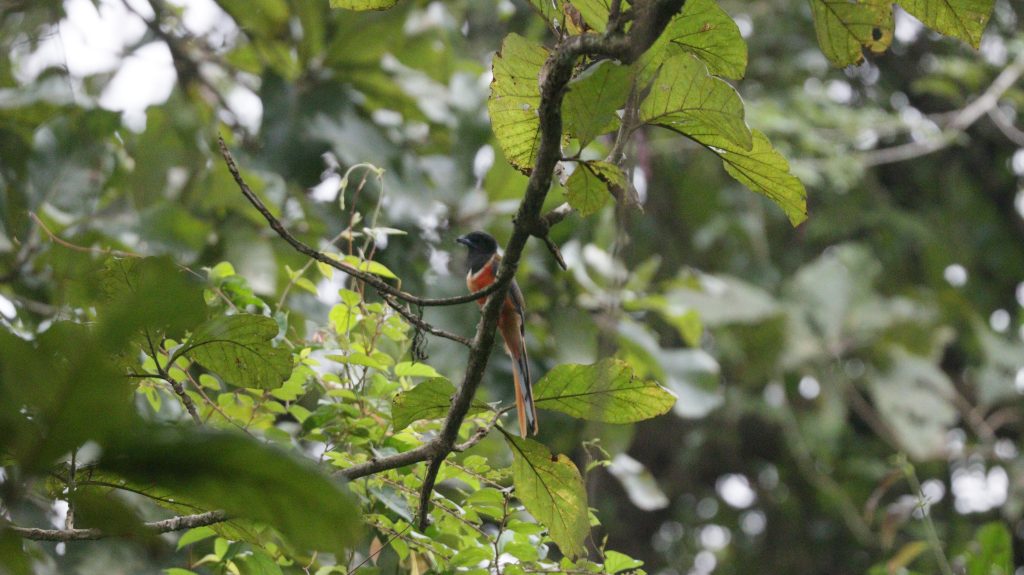
The Salim Ali Trail rewards a slower, more general style of birding. Expect orioles, dollar birds, jungle fowl, hill mynahs, and various thrushes moving through the canopy and understorey, alongside a genuine chance at the Malabar trogon — one of Thattekad’s most photogenic forest residents, with a rich chestnut back and rose-pink breast that make it a favourite target even for visitors who aren’t dedicated birders. Morning hours between 7:30 and 10:30 a.m. consistently deliver the most activity, before the day’s heat settles in and birdsong quiets.
The Baza Trail
Unlike the Salim Ali Trail, the Baza Trail requires a forest guard escort and runs only in the early morning, typically 7 to 8:30 a.m., for a duration of roughly three and a half hours through denser forest. The name comes from its target species — the black baza, a small, striking migratory raptor with a distinctive crested silhouette, present seasonally rather than year-round.
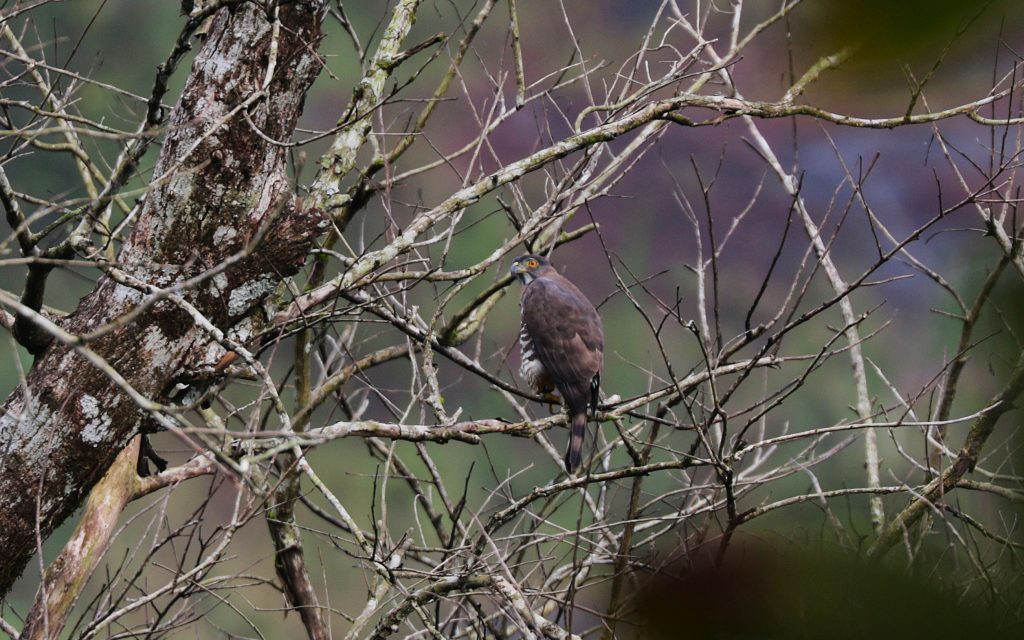
Because the black baza is genuinely elusive, some visitors skip this trail entirely when local reports suggest low odds on a given day — it’s worth asking your guide directly about recent sightings before committing your morning to it, rather than assuming the trail’s name guarantees the bird. When conditions align, though, this denser forest section also produces strong general sightings beyond the baza itself, including raptors like the crested goshawk and rufous-bellied eagle working the same canopy.
The Frogmouth Trail
This is Thattekad’s signature experience, and arguably the reason serious bird photographers make the trip at all. The trail is built specifically around locating the Sri Lanka frogmouth — a nocturnal species with camouflage so effective that experienced visitors have described standing within arm’s reach of a roosting pair without noticing them until a guide pointed directly at the branch.
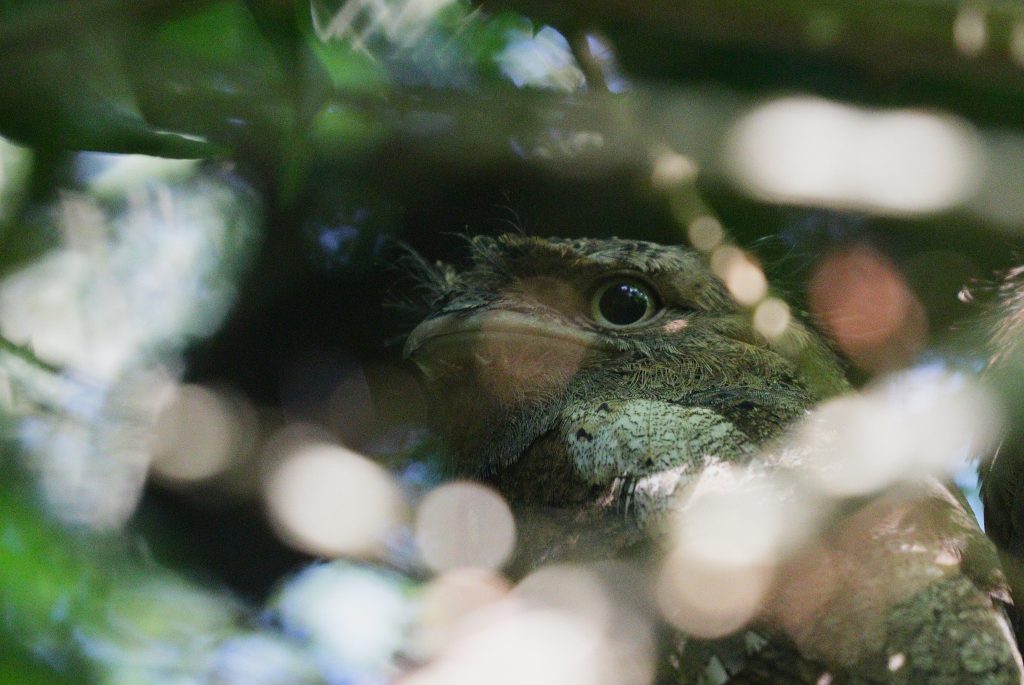
Thattekad holds the highest concentration of confirmed Sri Lanka frogmouth sightings anywhere in India, largely because local guides maintain detailed knowledge of regular daytime roosting spots — this isn’t a species you stumble across by chance walking a general trail. Sightings here are frequently close-range and genuinely still, since a roosting frogmouth relies entirely on camouflage rather than flight to avoid detection, which makes for extraordinary photography opportunities once you understand not to move suddenly or use flash near a roost.
The Lagoon Trail
Where the previous three trails work the sanctuary’s forest interior, the Lagoon Trail shifts entirely to wetland habitat — village-adjacent marsh and backwater formed by the Bhoothathankettu dam, a short distance from the core forest trails. This is typically arranged through a local naturalist or camp rather than walked independently, and it delivers Thattekad’s water-associated species almost exclusively: oriental darters and cormorants working the open water, herons and egrets along the margins, and migratory waders passing through during the cooler months.
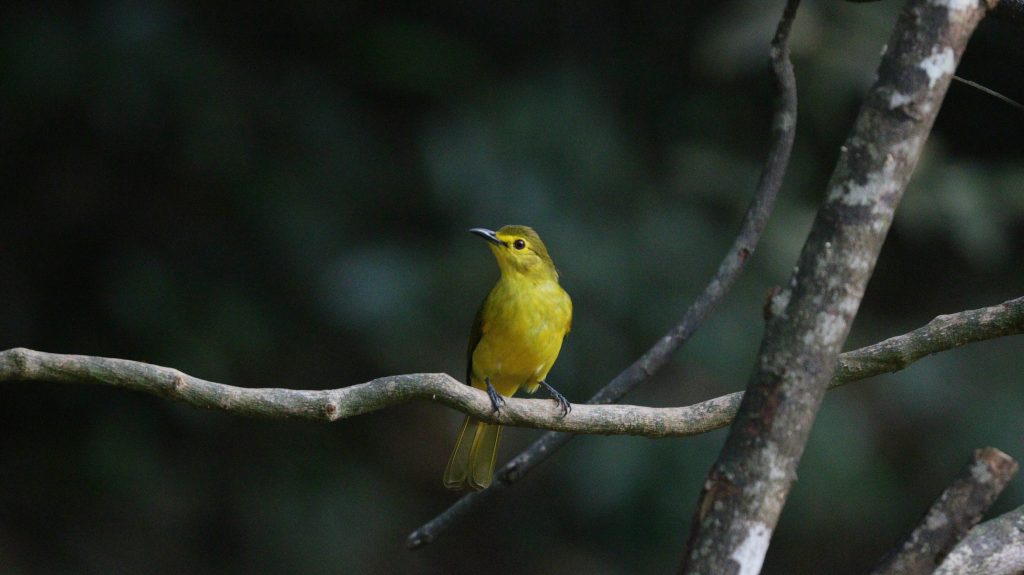
The open sightlines here make this the most straightforward trail for photography relative to the dense forest interior — species tend to perch predictably at favoured fishing spots rather than moving unpredictably through thick cover, which suits photographers still adjusting to Thattekad’s more challenging forest conditions.
Beyond the Named Trails: Night Sessions and Hides
Thattekad’s real specialty happens after the four daytime trails close for the evening. Dedicated night birding sessions — arranged separately from the standard trail system, usually through a naturalist or camp rather than the sanctuary’s general ticket counter — target species that simply aren’t available during daylight hours: the great eared nightjar, Jerdon’s nightjar, and savanna nightjar among the more commonly sought, alongside a genuine chance at owls including the mottled wood owl, oriental bay owl, and oriental scops owl.
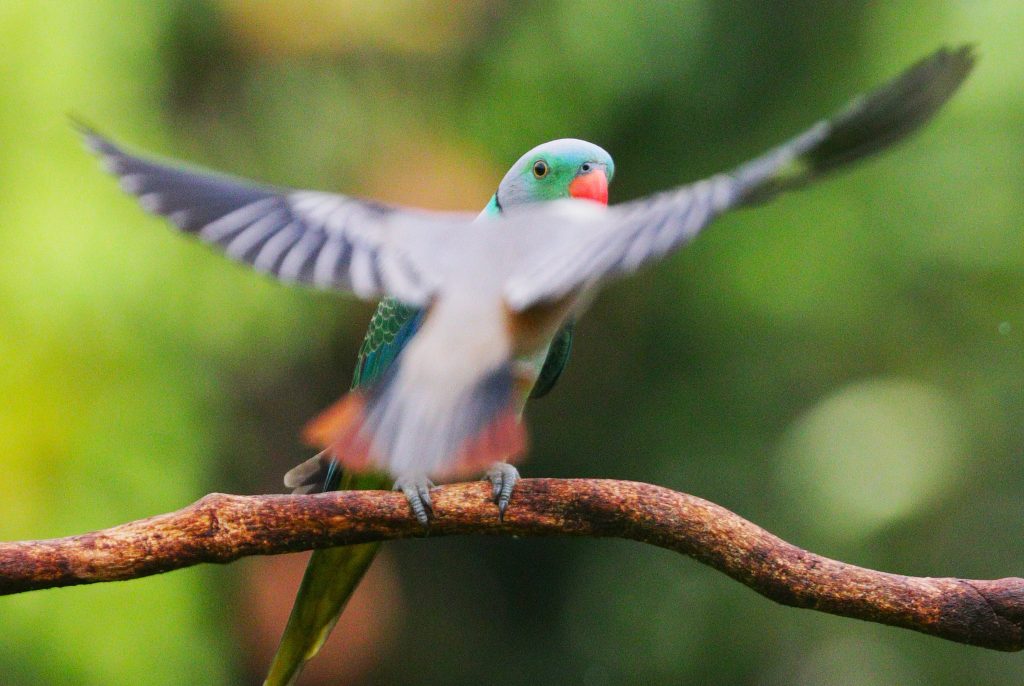
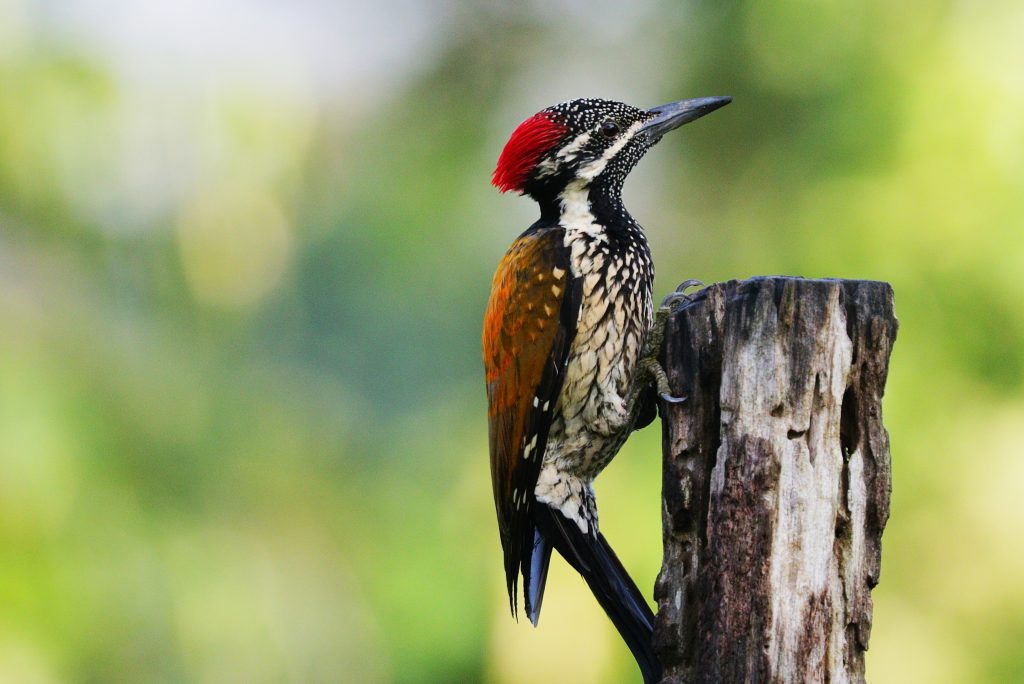

Fixed photography hides, positioned near known feeding or roosting sites, offer a fundamentally different approach from walking a trail — patient, stationary waiting rather than active searching, well suited to photographers targeting a specific, difficult species rather than building a broad general list. If a particular bird is your genuine priority for the trip, ask about hide availability specifically when planning rather than assuming a trail walk alone will deliver it.
The Endemics Worth Knowing By Name
Cutting across all four trails is a category of species worth understanding on its own terms: roughly a dozen to fourteen birds found only within the Western Ghats, nowhere else on the planet. Malabar grey hornbill, Malabar parakeet, Malabar barbet, and Malabar woodshrike form one cluster, alongside white-bellied blue flycatcher, flame-throated bulbul, crimson-backed sunbird, white-bellied treepie, rufous babbler, and grey-headed bulbul. Rarer still, and considerably harder to find, are species like the Wayanad laughing thrush and Nilgiri wood pigeon, which reward repeat visits and genuinely expert local guiding more than a single trail walk ever could.

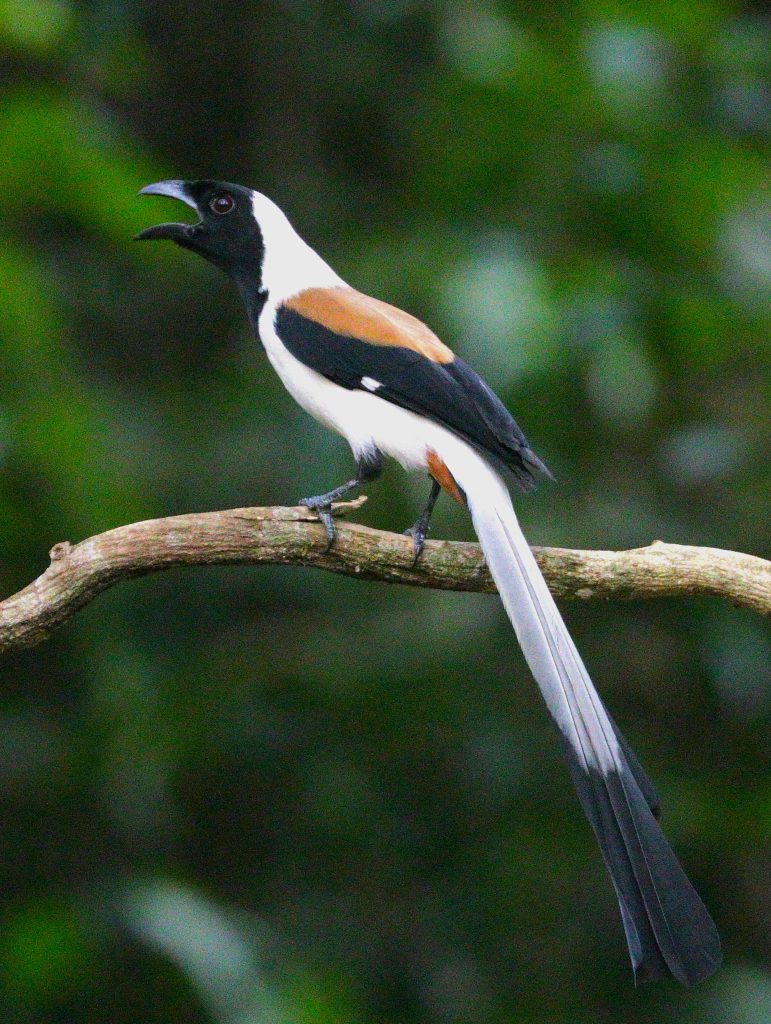
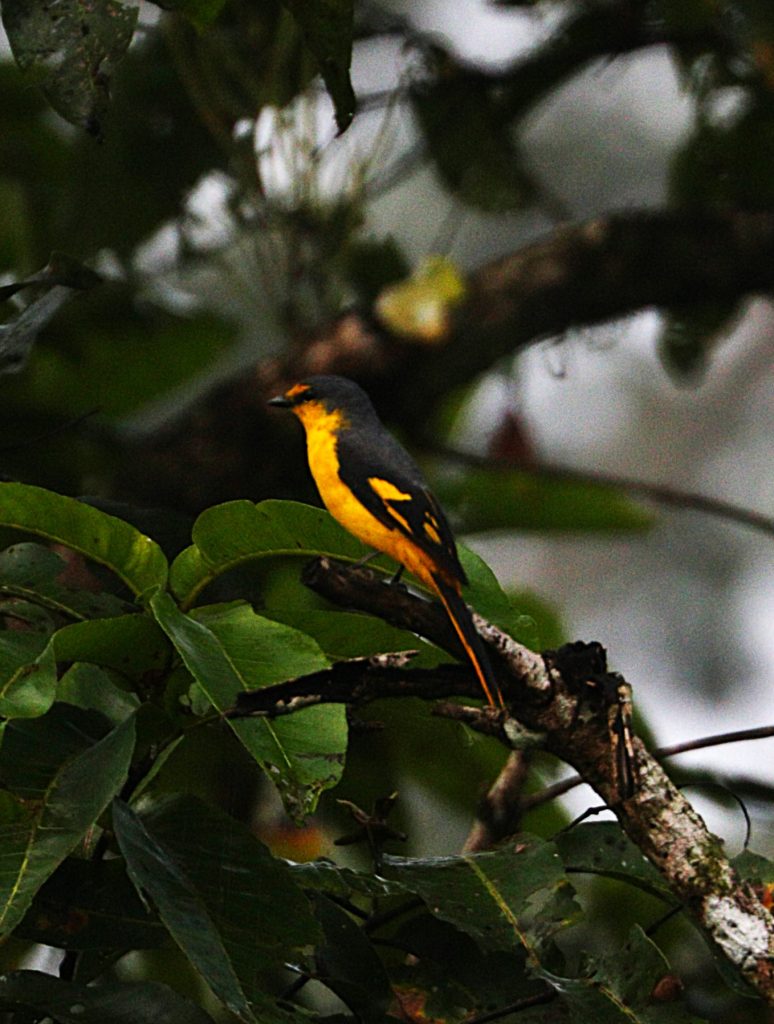
These endemics aren’t confined to a single trail — they move across forest, edge, and canopy habitat depending on the individual species, which is exactly why understanding Thattekad’s habitat diversity beforehand shapes which trail and which time of day actually gives you the best odds at any specific one on your list.
Planning Around What You Actually Want to See
The practical lesson across all four trails and the night sessions beyond them is the same: Thattekad rewards visitors who arrive with a target list, not just a general intention to “see some birds.” A trip built around the Salim Ali Trail alone will deliver a satisfying, broad birding morning, but it won’t get you the frogmouth, the black baza, or the wetland specialists that require their own dedicated trail and timing. Decide what you’re actually hoping to see before you arrive, and let that decision — not just convenience — determine which combination of trails, hides, and night sessions your visit actually includes.
For everything else worth knowing before you go, see our complete guide to planning a Thattekad trip.
I think this is a must read for every birder before thhe/she visit Thttekad!!